

International
No Borders?
Us Neither.
| What we do |
PennEWB’s foreign involvement is a mutually beneficial process. Partner communities are provided with needed assistance to improve quality of life and plan for their future. Students are exposed to new cultures, obtain experience planning and implementing an engineering project, and are made aware of outstanding engineering challenges in developing communities.
Penn Engineers Without Borders promotes sustainable development through access to technology. The student-run non-profit organization’s dual efforts focus on helping developing communities worldwide with their engineering needs through real, hands-on engineering projects, and on educating students and the Philadelphia area community about sustainable development and engineering.
This year’s Penn EWB International Team will be working on a sanitation project, which includes an implementation trip to the Lake Atitlan region of Guatemala.
Penn EWB Guatemala Trip Application deadline: Tuesday, October 27th at 11:59 PMApply here: https://docs.google.com/forms/
Please feel free to contact Grace Memmo () with any questions!
| Past Projects |
Lake Atitlan, Sololá, Guatemala: 2010-2015
Tzununá: Latrine System 2015
Tzununá is a partner project to our previous projects in Guatemala built off of the latrine system implemented in Pajomel (explained below).
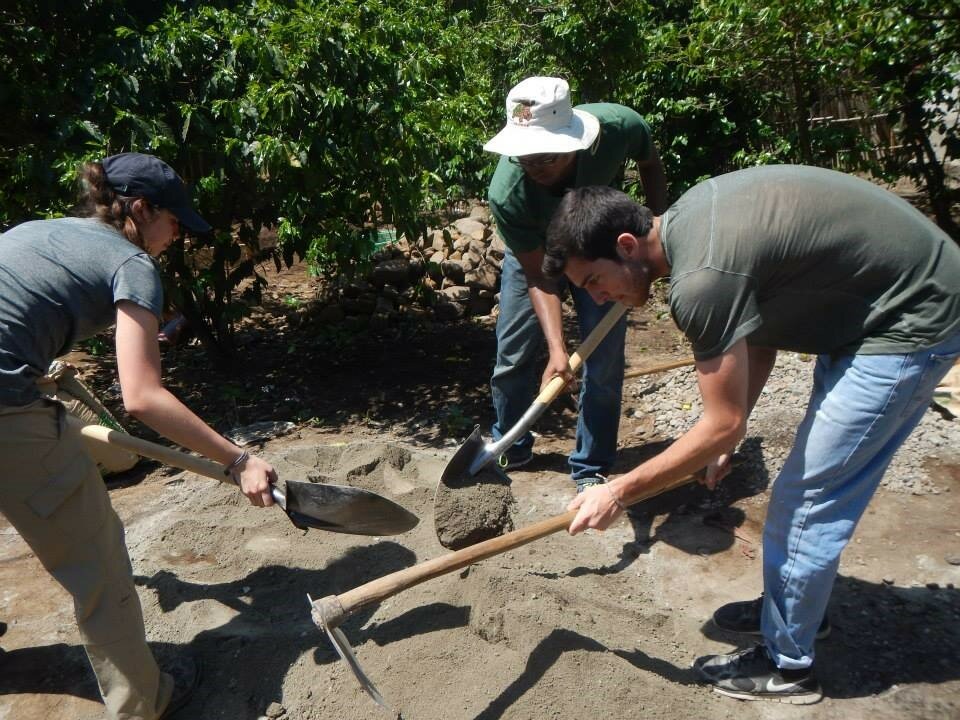 PennEWB started its involvement with this village just this year! Most families in the community have dilapidated latrines and some have no latrines at all. We are working to construct latrines for every family in the community. Over our recent implementation trip this summer, we were able to construct 12 latrines with the help of the local masons and the NGO we have been working with, Ati’t Ala’. We have also taught health and sanitation in the school and nutrition center. We look forward to returning next year to construct even more latrines!
Pajomel: Irrigation and Latrine Systems 2010-2014

Pajomel is a farming village located above Lake Atitlan in Sololá, Guatemala. In August 2011, the chapter started its involvement in the community with an irrigation project that provided irrigation capabilities to several village farmers. After the irrigation implementation trip, the need for latrines was brought to our attention by community members and Ati’t Ala’, our local partner NGO. There are currently 85 families in Pajomel. Most have dilapidated latrines and some have no latrines at all. In our three implementation trips since, we have worked with the community to construct numerous latrines with a goal of providing a latrine for every family. Our help will not only improve their standard of living but also decrease health problems. Appointed health officers in Pajomel have identified many health issues that point to poor sanitation and PennEWB has implemented a multitude of health curricula in the school. The work PennEWB has done in the village has drastically improved the health and sanitation situation in Pajomel.
Bome Valley, Cameroon: 2007-2014
Gravity Fed Water Distribution Systems
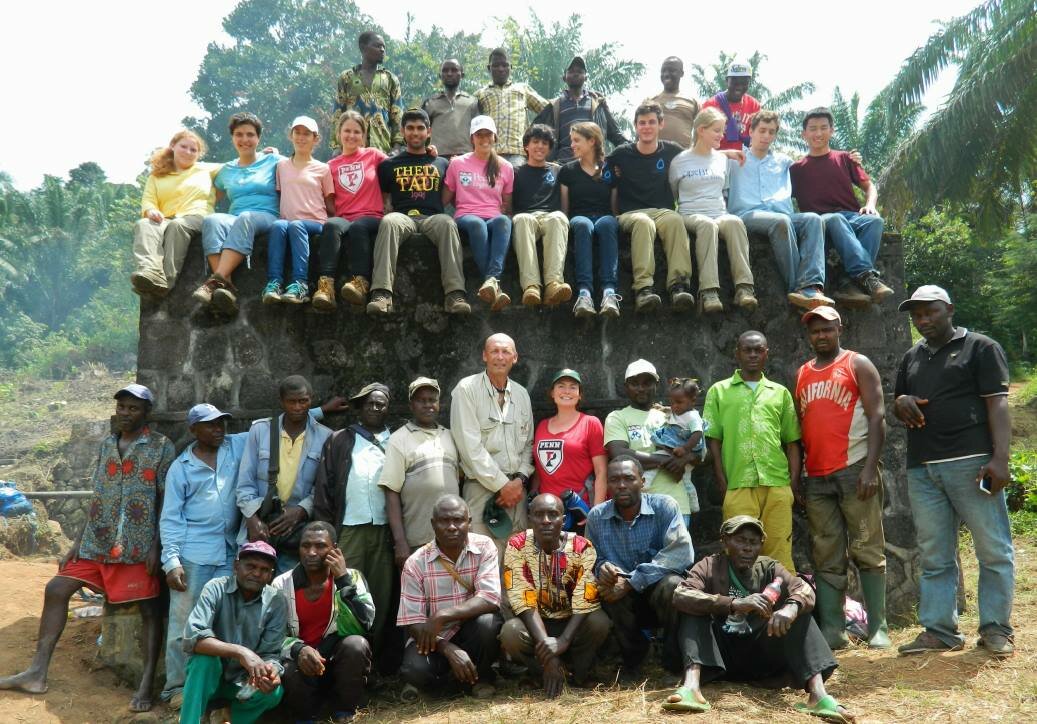
From 2007 to 2014, PennEWB implemented water distribution systems in different villages located in the Bome Valley in the Northwest Region of Cameroon. The chapter has implemented five successful projects in the region. The first two projects involved building water catchment and piping systems in the villages of Kob/Tudig and Gundom. The chapter then implemented a latrine sanitation project in 2011 with local schools in the town of Mbengwi followed by a water rehabilitation project in 2013 and 2014.
 In 2007, the village of Kob expressed a need for a water distribution system to supply clean water to households in the area as well as to a local health center, church and nursery school. The PennEWB team implemented a newly designed water system. The project consisted of the excavation and protection of two spring sources, installation of pipelines through critical areas, and initial construction of two storage tanks. Village members were provided the supplies to finish construction after the team left.
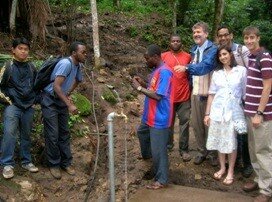 In the summer of 2009, PennEWB constructed two spring protection and distribution systems in Gundom. One system consists of a spring protection box and a gravity-fed water distrubtion system that services 14 households. The other system consists of a storage tank, hand-pump, and a distrubtion tank that provides clean water to 4 standpipes located throughout the village. PennEWB team members also presented skits to residents about hygiene and sanitation to ensure proper water use and healthier habits.
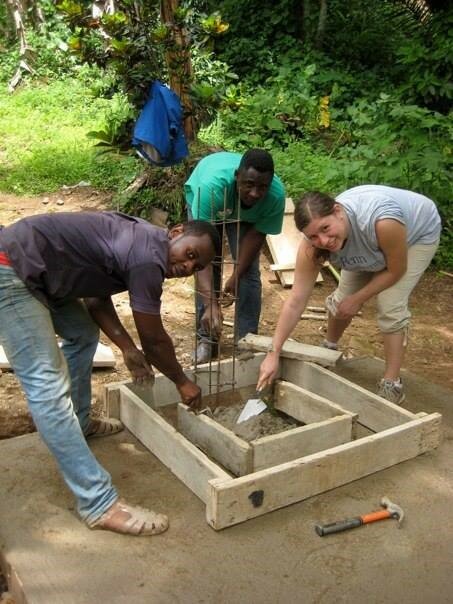 In the summer of 2013, PennEWB worked to improve the head works of an existing water system that supplies water to over 2,000 people. Students, chapter mentors, and community members converted an unused slow sand filter into a storage basin, reinforced two water catchments to improve water quality, and created additional access hatches in sedimentation basins to improve ease of maintenance. The team also conducted health surveys with women’s groups and maintenance training with representatives of a newly established water committee.
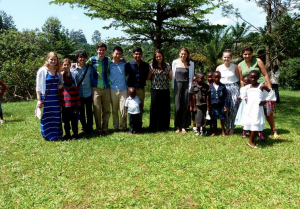
Lastly, in the summer of 2014, PennEWB returned to the Bome valley to supply water to the remaining village, Bakob. The team built three standpipes and connected pipes to the distribution box (built on a previous project) to give clean water to approximately 40 members of the community. Health education was also taught.
Territos, Honduras: 2006-2007
Latrine Systems and Water Distribution
 PennEWB returned to Terreritos to assist in the initiation of a latrine program and to attend the official inauguration of the water system. The team broke into workgroups to help individual families construct latrines based upon a government design in common use in theregion. Upon departing this group also worked with the local Patranato (community council) to arrange a system for the remaining families to receive materials and any assistance necessary by skilled community members such as masons in completing construction of a latrine.
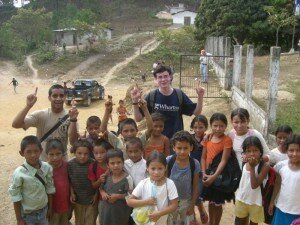
Prior to 1995, the community extracted their required daily water from small and sparse wells and springs located on the outskirts of the community. As many of these wells ran dry, the supply proved insufficient for the 25 families that lived in the town at that time. In 1995, the community obtained the support to install a water system at a spring located two kilometers away. At the time, this system met the needs of the community. However, the population has since grown significantly, bringing the total number of homes to 46. As a result the water system was no longer sufficient. The lack of a proper water system led to problems of health, hygiene and diet in the community. The villagers of Terreritos, Honduras, were lacking a sufficient amount of clean water to meet their basic needs. Additionally, as of 2006, fewer than ten households had access to a latrine. This condition further contributed to health and hygiene related problems.